May we use Meta and Google cookies to learn which films and pieces people like? Details
It isn't waving hello. It is calling you in.
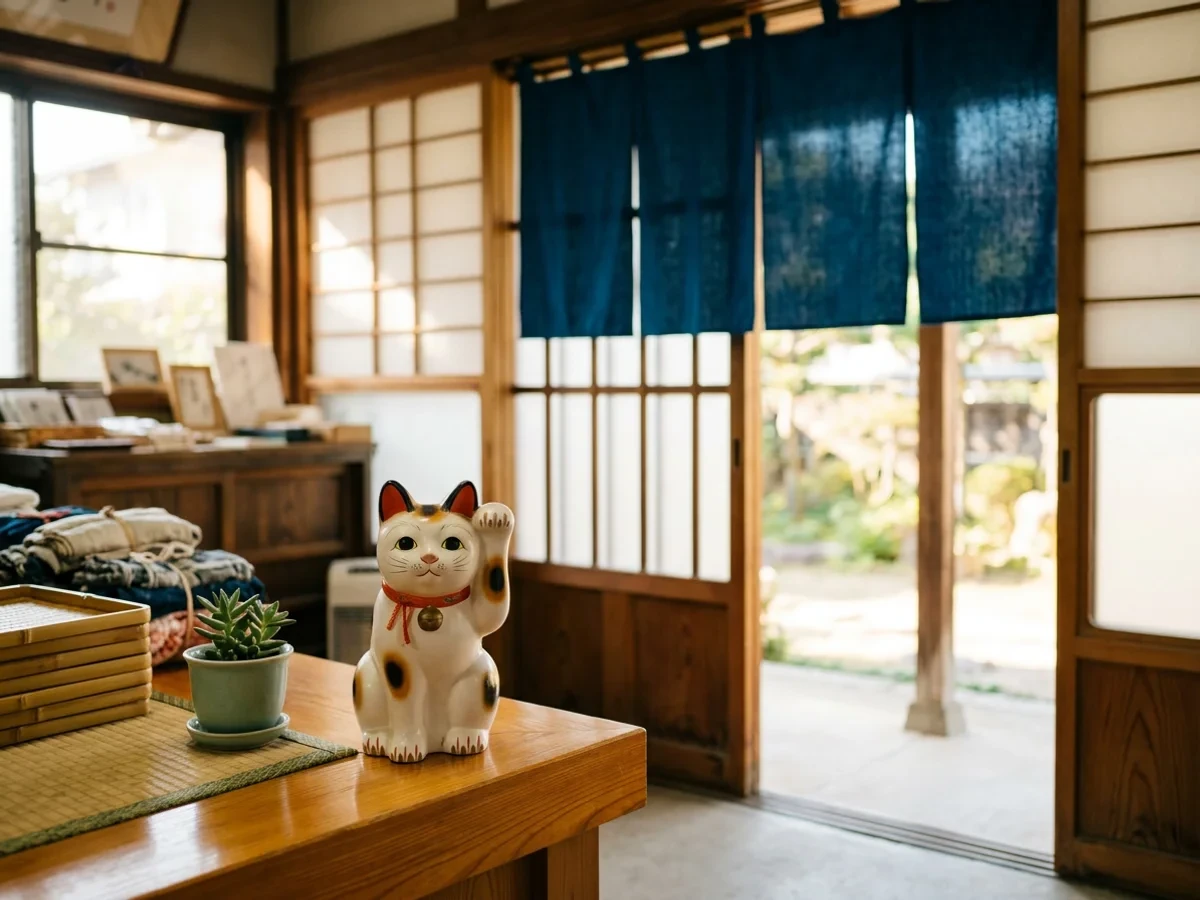
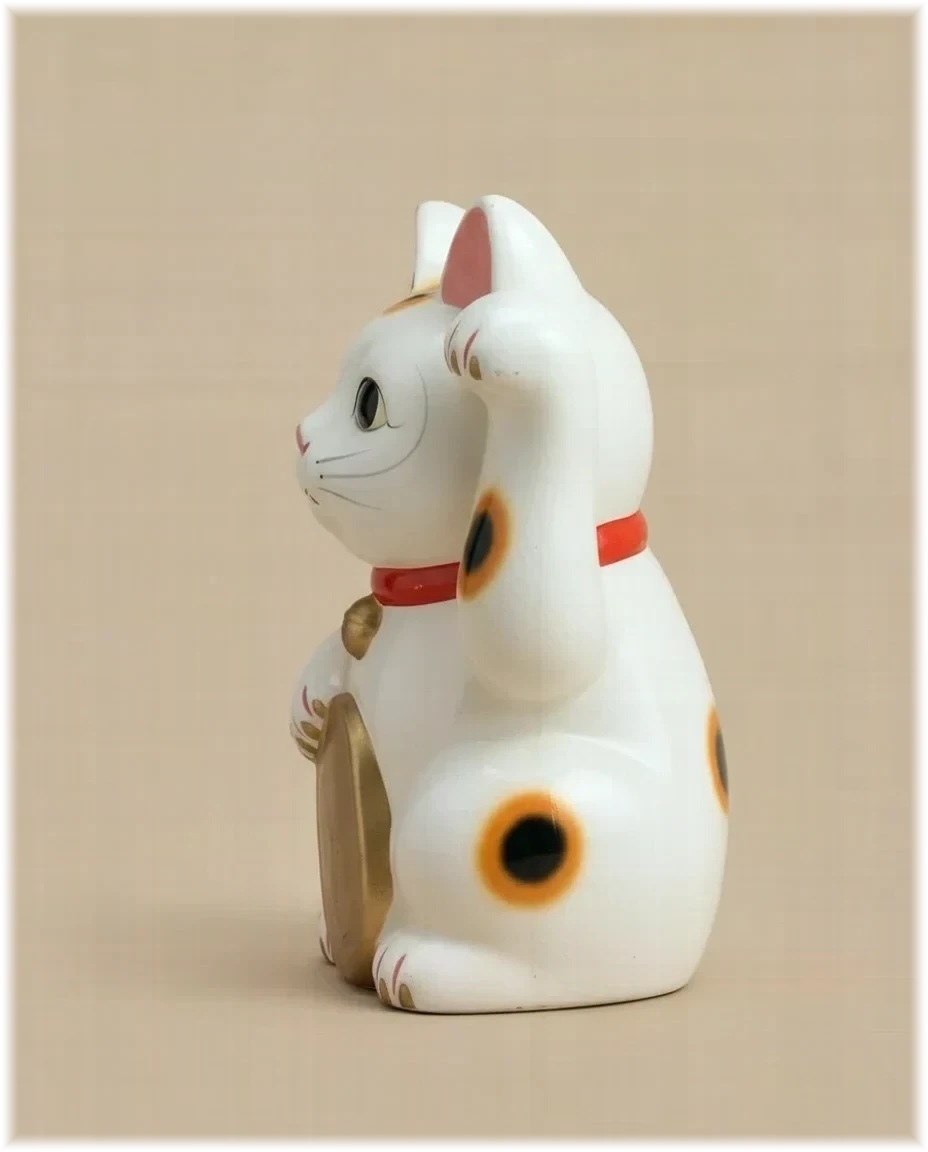
12 pieces on the shelf ↓The paw is the whole object. To a Western eye the cat is waving — hand up, hello. In Japan you beckon someone with the hand held up, palm down, folding the fingers down and back. Maneki-neko means the beckoning cat, and it is asking you to come inside.
The story told most often belongs to Gōtoku-ji, a small temple in what is now Setagaya, in Tokyo. Early in the Edo period a lord, Ii Naotaka, was riding home from hawking when a cat at the temple gate seemed to call him in. He went. Then the sky broke into a violent thunderstorm, and he sat it out under the temple roof, thanking the priest for his kindness.
You've seen this cat in a thousand restaurants. It isn't waving hello. In Japan, you call someone over with your palm down, fingers folding. The cat is saying: come in. Almost four hundred years ago, a lord was riding home from a hawking trip, past a poor little temple outside Edo. At the gate, a cat seemed to call him in. He went. Then the sky broke open in a violent storm. He waited it out under the temple roof, and made it his family's temple. A poor temple prospered, because of a cat. Which paw it raises matters. The left calls in people. The right calls in money. The round-eyed cat you know comes from Tokoname, a pottery town that started making them in the late nineteen-thirties. If you'd like one of your own, Maison Homura will go and look for it. So it isn't waving hello. It's asking you in.

 Kutani Praying CatNew · Made in Japan · 6 colours · Kutani porcelainFrom $169 · Free shipping to 32 countries

 Lucky Cat Sake Set: A Fortune in GoldNew · Made in Japan · Mino-yaki porcelain · flask, two cups, five shallow cups · two gift boxes$139 · Free shipping to 32 countries

 Lucky Cat Sake Set: May Business ThriveNew · Made in Japan · Mino-yaki porcelain · flask, two cups, five shallow cups · two gift boxes$139 · Free shipping to 32 countries

 Lucky Cats for Two: Rice Bowl SetNew · Made in Japan · Mino-yaki · two bowls, two pairs of chopsticks · gift box$109 · Free shipping to 32 countries

 Kutani Daruma Maneki NekoNew · Made in Japan · Kutani porcelain · five-colour overglaze · 16 cm$320 · Free shipping to 32 countries

 Tokoname Ware Maneki NekoVintage · Made in Japan · Tokoname ware · glazed ceramic · 10 cm$98 · Free shipping to 32 countries

 Kutani Maneki-neko, White FujiVintage · Made in Japan · Kutani porcelain · overglaze enamel · 17 cm$190 · Free shipping to 32 countries

 Lucky Cat Gift Set: Four Cotton Cloths by HamamonyoNew · Made in Japan · Hamamonyo · cotton · three tenugui and one towel, 34 × 90 cm each$68 · Free shipping to 32 countries

 Kutani Maneki-neko, Black MoriVintage · Made in Japan · Kutani porcelain · raised enamel (mori) · 7 cm$110 · Free shipping to 32 countries

 Kutani Maneki-neko, Calico MoriVintage · Made in Japan · Kutani porcelain · overglaze and raised enamel · size 7 · 23 cm$390 · Free shipping to 32 countries

 Kutani Daruma Maneki-neko, PairNew · Made in Japan · Kutani porcelain · overglaze enamel · set of two · 7 cm$129 · Free shipping to 32 countries

 Kutani Maneki-neko, Kissho MoriVintage · Made in Japan · Kutani porcelain · raised enamel (mori) · size 7 · 23 cm$460 · Free shipping to 32 countries
These are the pieces we have in Fukuoka today. After something else? Tell us here.
5.0 · Star Seller on Etsy ↗Pick a budget and who it is for — that is enough. We write back with photographs, condition and a price.
Sent. We will write back to that address.
That did not go through. Try again in a moment.
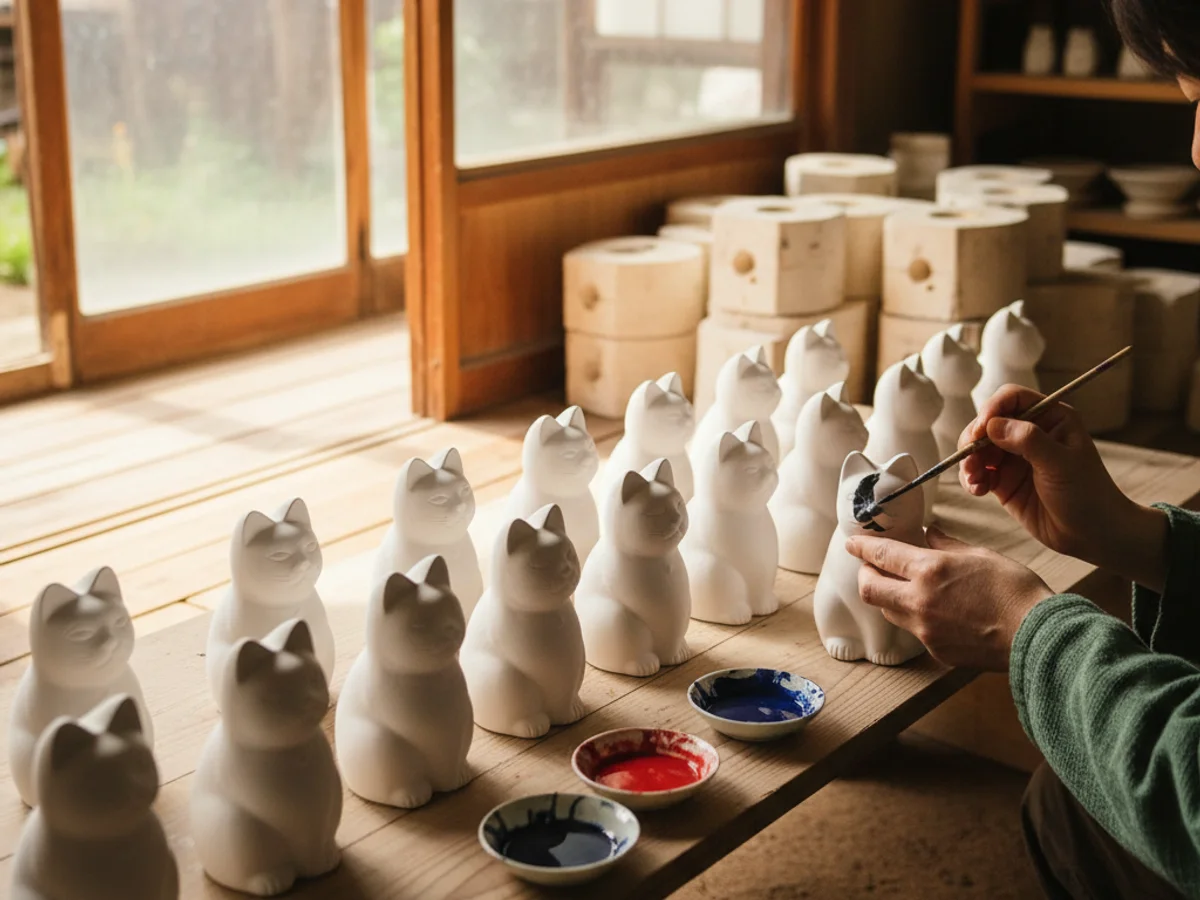
One cat is modelled by hand. Every cat after it comes from this one.
Liquid clay is poured into a plaster mould; what sets against the plaster becomes the cat.
Dried, taken out of the mould and fired.
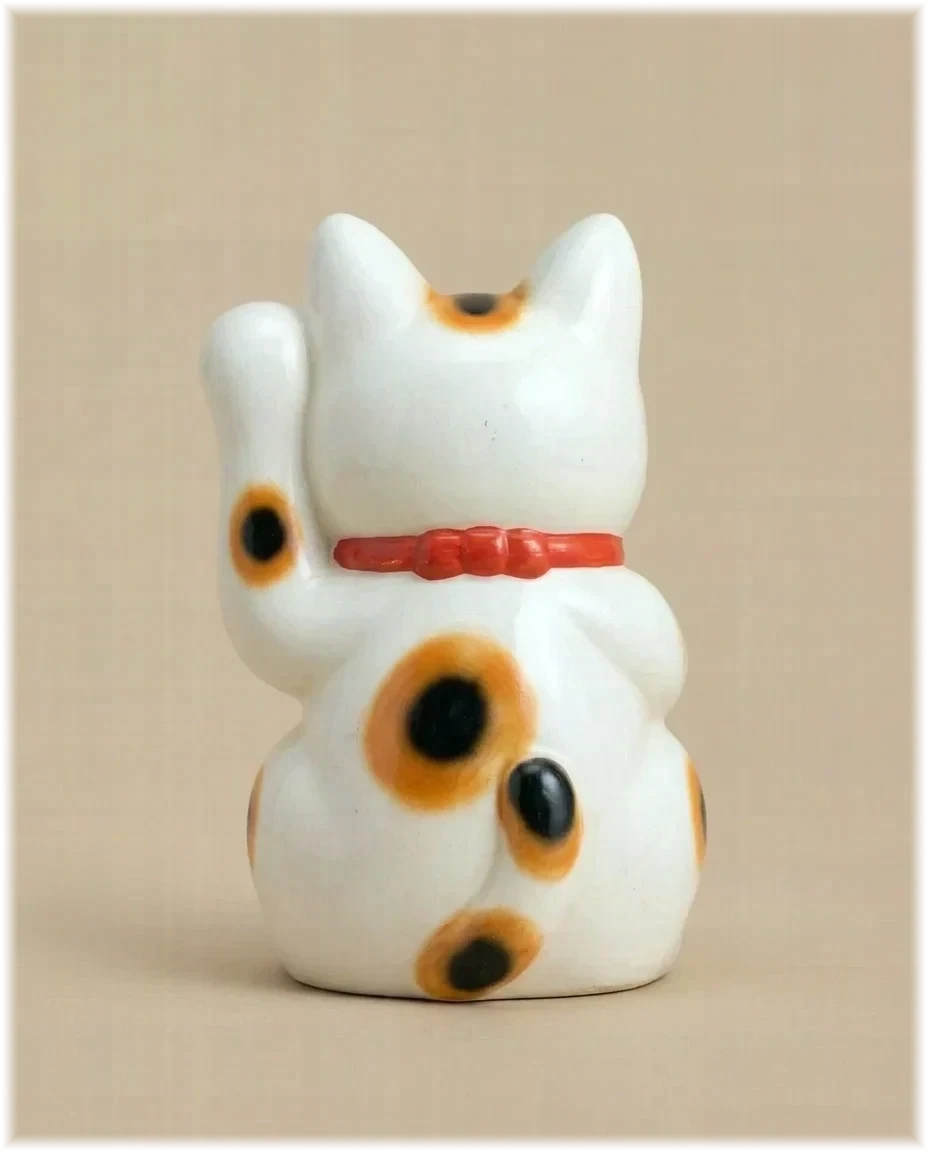
Black and orange patches, the red collar, the gold coin — painted by hand.
He made it his family's temple, and a poor temple became a prosperous one. The cat that had stood at the gate became the reason. Other places tell their own version — Jishō-in in Shinjuku, and Imado in Asakusa, where clay cats were sold to people visiting the shrines. The figurine itself first turns up in the records in 1852, the year Hiroshige drew one on sale at Sensō-ji.
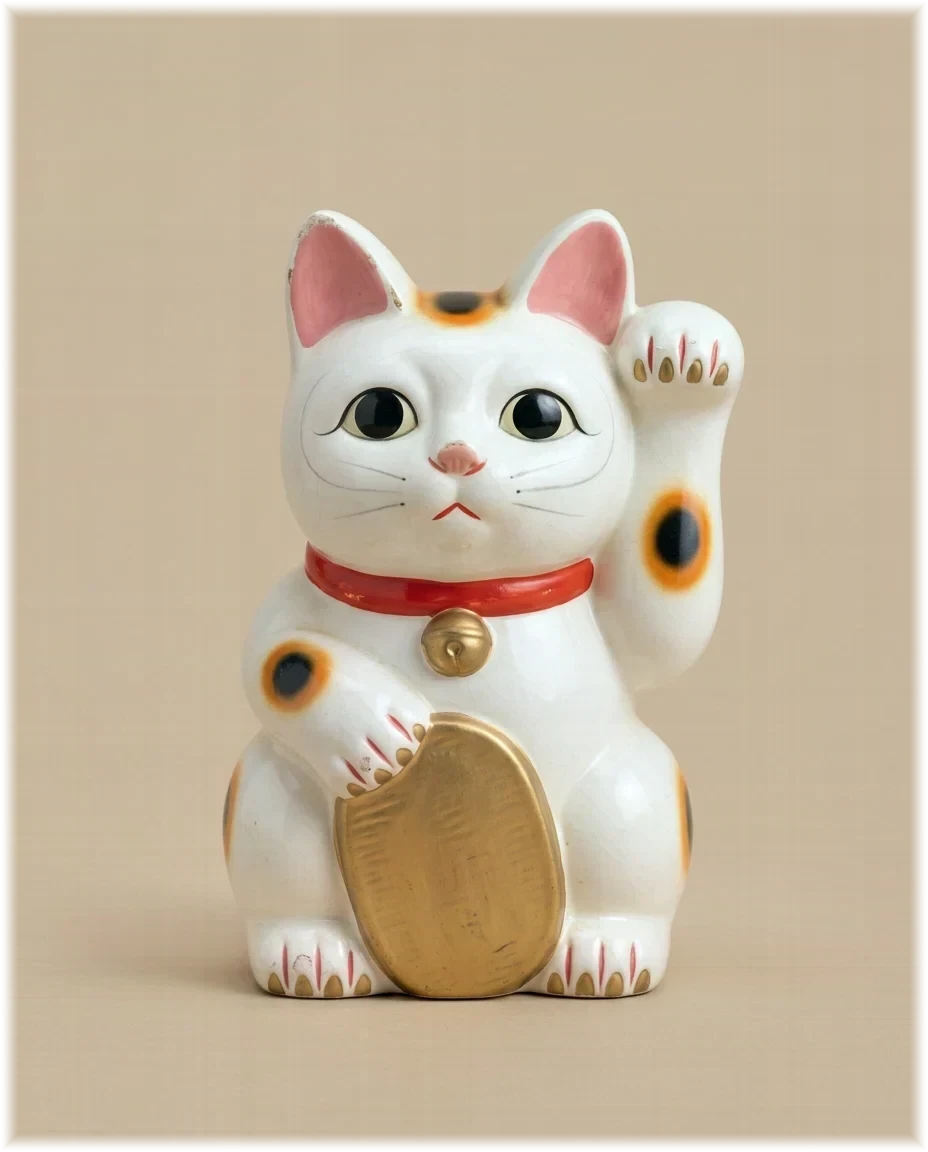
Which paw is raised matters. A left paw calls in people — customers, company, a full shop. A right paw calls in money. A shop counter usually wants the left.
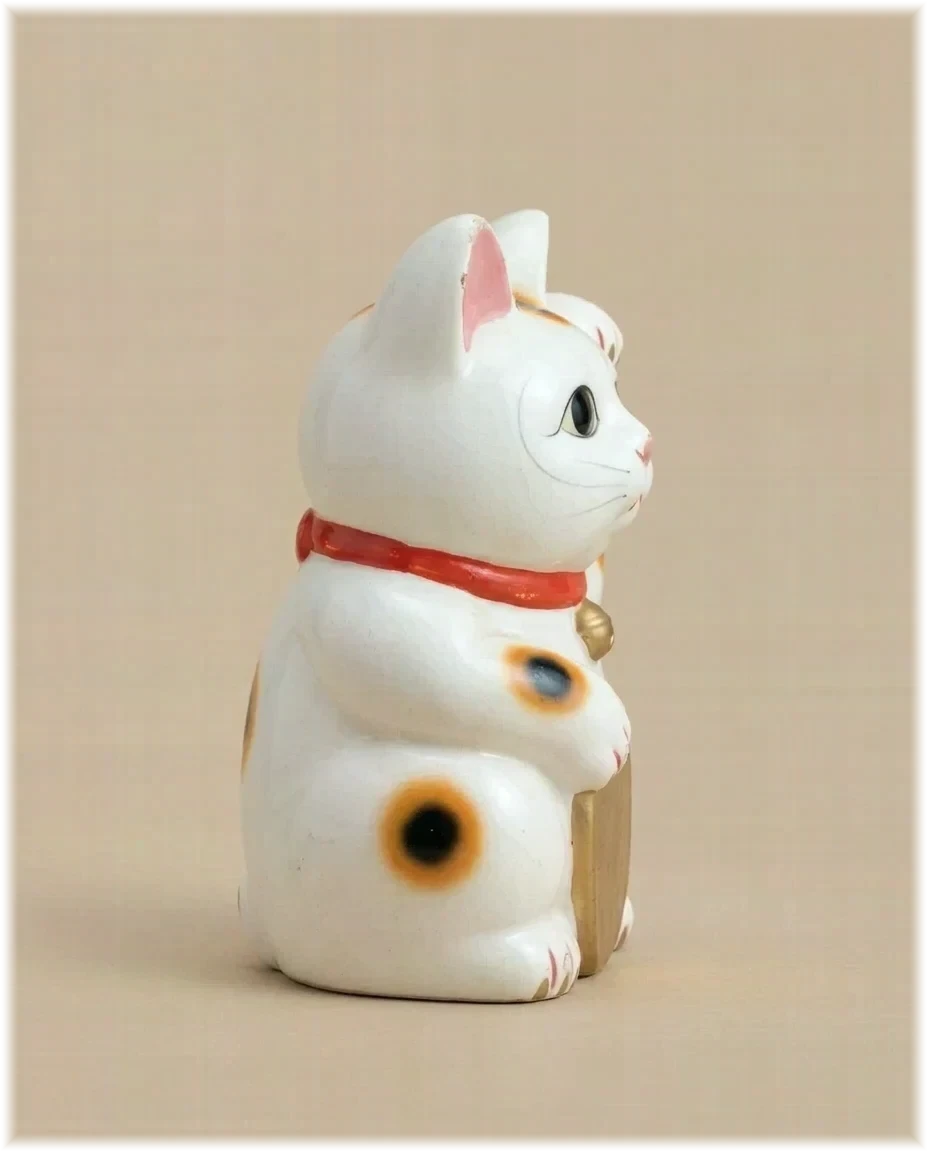
The round-eyed, big-eared cat most people picture is from Tokoname, the red-clay town in the case just before this one. Its potters turned to cats in the late 1930s, when the older trade was failing, and by 1950 the town was Japan's main maker. Calico white with black and orange patches, a red collar and bell, and in the other paw a koban — an oval gold coin of the Edo period — held against the chest.
A peninsula town built on iron-red clay, and the oldest of the Six Ancient Kilns. At its height in the twelfth century there were some three thousand kilns on these hills turning out storage jars, and the jars went everywhere the coastal boats went — Tokoname pots have been dug up the length of Japan.
Hello! Ask us anything: a piece, a size, shipping, or something you are looking for. Photos are welcome too.