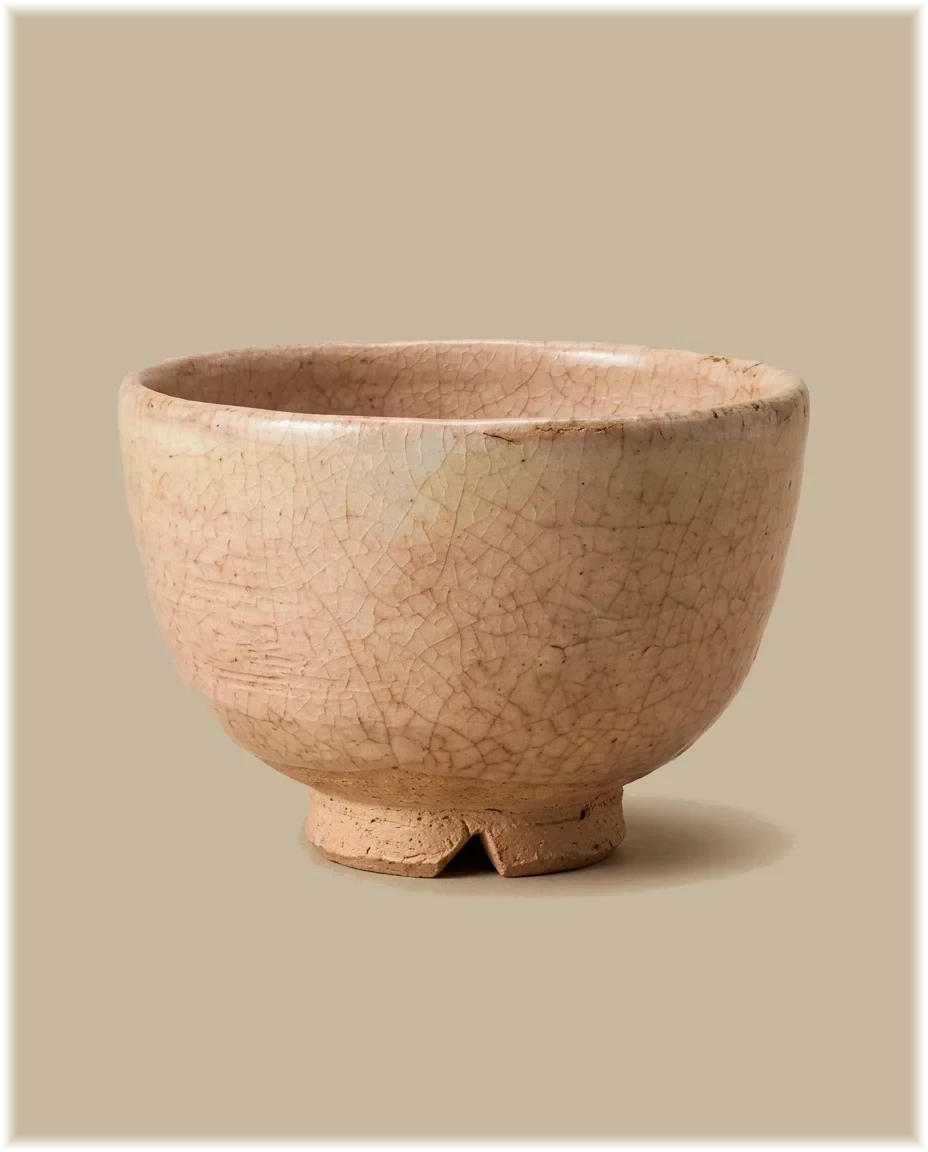
The weight of a ceramic tea bowl changes depending on the moisture it holds. A bowl drawn from a wooden storage box feels light in the hands. Submerge that same piece in water for half an hour, and it emerges tangibly heavier, its colour slightly deepened. A Japanese tea bowl (chawan 茶碗) is not a sealed, static object. It is a porous body of clay and glaze. It takes in water, it holds heat, and it records the physical history of its use.
Porcelain is fired at extremely high temperatures until it vitrifies, turning to glass. Water cannot enter it. Most Japanese tea bowls, however, are stoneware or earthenware. They are fired at lower temperatures, leaving the internal structure of the clay open and breathable. The glazes applied to them are often thick and intentionally fractured. Caring for a vintage matcha bowl means managing how water and tea interact with these open spaces. The routine requires patience, but it ensures the bowl survives for generations without developing mold, absorbing chemical odours, or shattering from thermal shock.
What should you do before using a matcha bowl for the first time?

When a vintage tea bowl arrives, its clay is completely dry. The microscopic pores within the walls are empty. If you pour hot, thick green tea directly into a dry, unglazed or crackle-glazed bowl, the liquid immediately rushes into those empty spaces. Matcha carries heavy tannins and bright green pigments. The result of this sudden absorption is a harsh, uneven stain that settles deep within the clay and cannot be washed out.
To prevent this, a bowl must be introduced to clear water before it meets tea. This process fills the porous clay with clean moisture, leaving no room for the dark pigments of the tea to penetrate too deeply.
Fill a clean basin with warm water. Submerge the tea bowl completely. Leave it underwater for fifteen to thirty minutes. As the warm water enters the clay, you will often see tiny bubbles rising to the surface. This is the trapped air being pushed out of the porous structure. Once the bubbles stop, the clay has absorbed its fill.
If a bowl is exceptionally porous, some tea practitioners recommend an initial soaking in rice water. This is the cloudy water left over after washing uncooked rice. The fine starch particles enter the crazing and act as a gentle, natural sealant, slowing down the rate at which tea stains the clay.
Soaking also serves a structural purpose. Sudden, extreme changes in temperature cause thermal shock. Pouring boiling water into a cold, dry bowl can cause the clay body to fracture entirely or the glaze to splinter. The warm water bath brings the temperature of the clay up gently, preparing it to handle the heat of the tea.
A Japanese tea bowl (chawan 茶碗) is not a sealed, static object. It is a porous body of clay and glaze.
How do you wash a Japanese tea bowl?
Wash a tea bowl with warm water and your bare hands. Do not use soap. Do not use dish detergent. Do not use a scourer, a hard sponge, or a stiff scrubbing brush. The rule against soap is absolute for porous Japanese ceramics. Because earthenware and loosely fired stoneware absorb whatever liquid they sit in, soapy water easily enters the fine cracks in the glaze. It settles in the clay body beneath. The next time you whisk hot water and matcha in the bowl, the heat will draw that soap back out to the surface. The tea will taste faintly of detergent, and the chemical residue can degrade the glaze over time.
Rinse the bowl immediately after you finish drinking. Rings of matcha dry quickly against the inner walls. If this happens, do not scrub the surface. Instead, fill the bowl with warm water and let it sit for five minutes to soften the residue. Use your fingers or a soft cotton cloth to wipe the inside clean.
Pay close attention to the foot ring at the base of the bowl (kōdai 高台). The foot is usually left unglazed so the raw clay is exposed, revealing the natural texture of the earth. Dirt and moisture gather easily in this coarse texture. Wipe it firmly but carefully with a damp cloth.
Never put a handmade tea bowl in a dishwasher. The harsh chemical detergents, the sustained high heat, and the mechanical force of the water jets will strip the glaze and permanently damage the clay. Never place a tea bowl in a microwave.
If a bowl has been washed with soap by a previous owner, or if it has absorbed a stale smell from being stored in a damp environment, you can boil it. Place a folded cotton cloth at the bottom of a large pot so the bowl does not rattle against the metal. Fill the pot with clean water, submerge the bowl, and bring it to a gentle simmer for twenty minutes to draw out the impurities.

Why does Hagi ware change colour over time?
Some ceramic traditions are designed specifically to change as they age. Hagi ware (萩焼), produced in Yamaguchi Prefecture, is the most famous example. Hagi traces its origins to the early seventeenth century, when Korean potters brought their techniques to the region. They utilized local materials, primarily mixing Daidō clay (大道土) and Mitake clay (三岳土). These clays contain high levels of gravel and remain open and breathable even after firing.
The glaze applied over this coarse clay shrinks at a different rate to the body as the piece cools in the kiln. This difference in thermal contraction creates a network of fine hairline cracks across the entire surface of the glaze. This intentional crazing is called kannyū (貫入).
When tea is prepared in a Hagi bowl, the liquid seeps through the kannyū and into the clay beneath. Over years of daily use, the tannins in the tea stain the crackles and the clay body. A bowl that began its life as a pale, milky cream gradually shifts toward warm ivory, and eventually to a deep, mottled amber.
This aging process is known as Hagi no nanabake (萩の七化け), or the seven transformations of Hagi. It is not a defect or a sign of poor hygiene. It is the defining characteristic of the tradition. Tea practitioners value Hagi ware precisely because it records the passage of time. The colour does not change evenly or in seven distinct stages. It shifts where the tea touches it most, creating a completely unique pattern dictated by the habits of the person who uses it.
The historical standing of these bowls is captured in the traditional tea saying ichi-Raku, ni-Hagi, san-Karatsu (一楽、二萩、三唐津)—first Raku, second Hagi, third Karatsu. Each of these three esteemed traditions interacts with moisture and aging differently.
| Tradition | Origin | Clay Structure | Glaze Characteristic | Aging Behaviour |
|---|---|---|---|---|
| Hagi (萩焼) | Yamaguchi Prefecture | Coarse, highly porous | Deep crazing (kannyū) | Rapid colour change (nanabake) |
| Raku (楽焼) | Kyoto | Soft, low-fired | Thick, porous | Very fragile, darkens slightly |
| Karatsu (唐津焼) | Saga Prefecture | Iron-rich, sandy | Thin, often painted | Gradual patina, subtle crazing |
How do you dry a porous ceramic bowl?
Wiping a tea bowl with a towel only dries the surface. The clay beneath the glaze remains wet. If a bowl is put away in a wooden box while the interior clay is still damp, it will develop mold and a musty odour in storage. Mold appears as dark grey or black spots blooming from the inside out, which is quite distinct from the warm amber tones of natural tea staining.
Drying requires time and moving air. After washing and wiping the bowl with a clean cotton cloth, leave it out in a well-ventilated space. Do not place it in direct, harsh sunlight, as rapid, uneven drying can cause the clay to warp or crack. Place it on an open shelf or a dry countertop. Airflow is far more important than heat.
A porous bowl like Hagi or Raku can take two to three days to dry completely. Water hides in the thickest parts of the bowl, usually the base and the foot ring. You can track the progress by weight. A dry bowl is noticeably lighter than a wet one. Many collectors weigh their bowls on a kitchen scale when they first arrive bone-dry, establishing a baseline weight. When the bowl returns to that exact weight after washing, no hidden moisture remains, and it is ready to be stored.
How should a tea bowl be stored in a tomobako?
A handmade Japanese tea bowl is almost always kept in a tailored wooden storage box called a tomobako (共箱). The box protects the bowl from physical impacts, extreme humidity, and sudden temperature shifts. It is typically made of paulownia wood (kiri 桐), a very lightweight timber that naturally regulates moisture and resists warping. The box is not merely packaging. It serves as the bowl’s provenance and certificate of authenticity. The potter or the kiln master signs the lid with a brush and ink, often stamping it with a red seal.
Before the bowl goes into the box, it is wrapped in a square cloth. This is the ukon cloth (ウコン布). Traditionally, this cotton cloth was dyed yellow using turmeric (ukon). Turmeric was believed to act as a natural insect repellent and antifungal agent, protecting the bowl during long periods of storage. Today, the cloth may be dyed with synthetic yellow pigments, but the name and the protective physical purpose remain the same. The cloth prevents the ceramic from rattling against the hard wooden sides of the box.
The tomobako is secured with a woven cotton ribbon called a sanada-himo (真田紐). This flat, strong cord does not stretch, allowing it to hold a knot securely under tension for decades. The ribbon passes under the box and crosses over the top of the lid, keeping the wood tightly sealed against dust.
Store the wooden box in a stable indoor environment. Keep it away from direct sunlight, heating vents, and damp basements. The paulownia wood will handle minor, natural fluctuations in room humidity, but it cannot protect the bowl if the external environment is extreme.
A tea bowl demands attention long after the tea has been drunk. It asks for a deliberate routine. The object must be prepared before use, cleaned gently without modern chemical shortcuts, and given days to rest and breathe. In return, the clay responds to those precise habits. The fine cracks in the glaze deepen in colour. The surface grows softer to the touch. The bowl you tie back into its wooden box after a decade of use is visually and physically different from the one you first unpacked. It ceases to be an anonymous piece of fired clay and becomes a tactile record of the mornings and evenings it has been held.
Maison Homura is a small museum of Japanese objects in Fukuoka — folk toys, ceramics, carved wood and Takaoka bronze, each catalogued with where it was made, how, and what it was for.