A Japanese year-end gift arrives wrapped in thick paper and bound by a cord made of tightly wound, starched rice paper. This cord, known as mizuhiki (水引), is not merely decorative. Its color and its knot communicate the giver’s exact intention before the paper is even torn. For a gift marking the transition into a new year, the cord is invariably red and white. It is tied in a simple, looped bow.
The choice of knot is absolute. In the visual vocabulary of Japanese presentation, a knot that can be easily untied and retied indicates an event the giver hopes will happen again. A new year, a birth, or a new home are recurring joys. A knot that cannot be untied—pulled tight and clipped short—is reserved for events that should only happen once, such as a wedding or a funeral.
For Westerners looking to give a meaningful gift for the holidays, a housewarming, or a new beginning, the Japanese tradition offers a deeply structured approach. It is an approach built on specific physical objects, strict material boundaries, and absolute taboos. The object itself often matters less than the intention it signals and the rules it observes. Understanding how to choose a Japanese gift requires knowing what the culture considers appropriate for a fresh start, and equally, what it explicitly forbids.
Why do the Japanese give gifts at the end of the year?

In Japan, the close of the calendar is marked by a formal gift-giving season known as oseibo (お歳暮). The term translates literally to the end of the year. The practice runs strictly from mid-December until the twentieth of the month. It is not an exchange of casual presents among friends, but a deliberate act of acknowledging debt. The gifts are sent to individuals who have offered guidance, support, or employment over the previous twelve months.
The practice of oseibo actually predates its secular, feudal application. It evolved from mitama matsuri, an ancient custom of offering food to ancestral spirits at the turn of the seasons. Over time, this spiritual offering was redirected toward the living. During the Edo period (1603–1868), members of the samurai class presented offerings to their superiors within their feudal factions at the year’s end. The merchant class adopted the practice, sending goods to their most reliable customers to ensure continued patronage. Over centuries, the custom shed its feudal weight but retained its core function: materializing gratitude. It is a physical manifestation of giri (義理), the social obligation that binds Japanese relationships.
Traditionally, the most appropriate oseibo gifts fall into a category called kiemono (消え物), which translates to things that disappear. These are consumable goods. High-grade green tea, preserved fish, quality cooking oils, seasonal fruit, and fine soaps are standard choices. The logic is highly pragmatic. A gift that vanishes once used does not burden the recipient with the obligation to display it. It occupies no permanent space in the home.
For a Westerner seeking a meaningful gift for a host, a colleague, or a family member, the concept of kiemono is highly effective. A carefully chosen, beautifully packaged consumable honors the Japanese ethos of gifting without imposing aesthetic permanence. It satisfies the obligation of respect while respecting the physical boundaries of the recipient’s domestic space.
The object itself often matters less than the intention it signals and the rules it observes.
What gifts and numbers should you avoid in Japan?
The rules governing what cannot be given in Japan are far more rigid than the guidelines for what can. These taboos are largely linguistic, rooted in homophones—words that share a pronunciation with concepts of finality, suffering, or death.
Numbers dictate the volume and arrangement of any gift. The number four must be entirely avoided. In Japanese, the word for four is shi (四), which shares its exact pronunciation with the word for death (死). Giving a set of four plates, four cups, or four pens is considered a severe misstep. The number nine is similarly forbidden. Pronounced ku (九), it sounds identical to the word for suffering or agony (苦). Gifts are instead given in odd numbers, with sets of three, five, and seven considered naturally balanced and auspicious.
Handkerchiefs carry a strict historical taboo. A plain white cloth, historically referred to as tegire (手切れ), translates literally to a cut hand, but idiomaticaly means the severing of a relationship. Furthermore, a plain white cloth is traditionally placed over the face of the deceased. Because a handkerchief is functionally used to wipe away tears, giving one implies that you expect the recipient to cry in the near future. It is a gift that signals a final, sorrowful goodbye.
Sharp objects are equally loaded with negative intention. Knives, scissors, and letter openers fall under the category of hamono (刃物), edged tools. To give a blade is to physically symbolize the phrase en wo kiru (縁を切る)—to cut the tie between two people. Even if a recipient is an enthusiastic cook, presenting a kitchen knife without a direct, prior request introduces a jarring symbol of separation into the exchange.
Combs are also avoided, particularly for older recipients. The Japanese word for a comb is kushi (櫛). The word combines the syllable ku (suffering) and shi (death), making it a deeply unlucky object to hand to another person.
Finally, when gifting flowers or plants to mark a new beginning, potted plants are avoided if the recipient has recently been ill. The roots of a potted plant signify being “rooted” (nezuku, 根付く), which sounds identical to the phrase for taking to one’s bed (netsuku, 寝付く), implying a prolonged sickness. Cut flowers are preferred, provided they are not the white lilies, lotus, or camellias associated with funerals.

What are traditional Japanese gifts for good luck?
If a giver chooses to present a lasting object rather than a consumable good, the traditional choice for a new year or a new home is an engimono (縁起物). These are physical charms believed to invite good fortune, protection, or prosperity. They are not considered magical talismans, but rather physical anchors for human intention, typically purchased at the turn of the year and kept for twelve months.
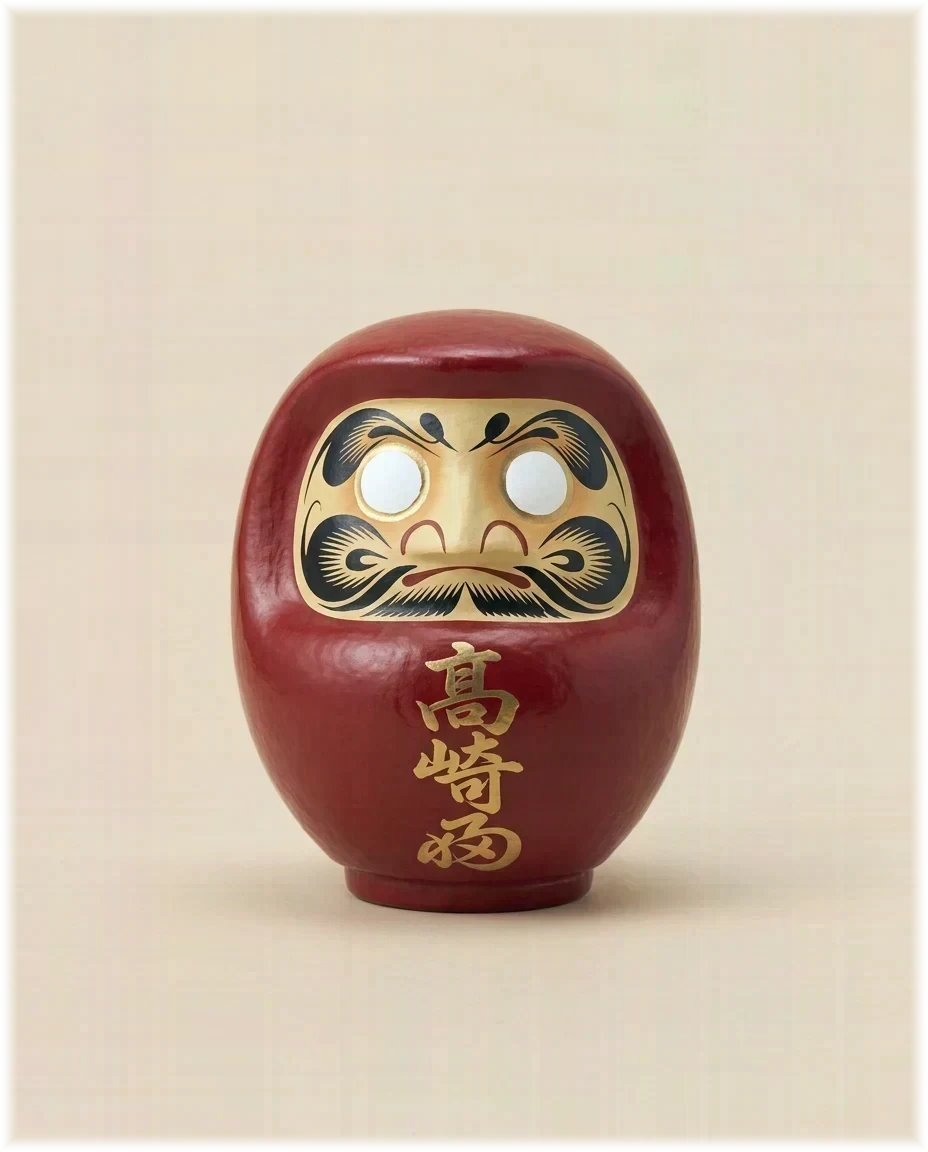
The most recognized engimono is the Daruma (達磨) doll. Typically made of hollow papier-mâché, known as hariko (張子), these rounded, weighted figures are modeled on the founder of Zen Buddhism. They are painted in vibrant red and feature a weighted base that forces the doll to right itself when knocked over—a physical embodiment of resilience. The doll is sold with blank white eyes. The recipient paints in the left eye when setting a goal, and fills in the right eye only when that goal is achieved. It is a gift that requires the recipient’s active participation.
Another common gift for a new beginning is the Maneki-neko (招き猫), or beckoning cat. Originating in the ceramic kilns of Aichi prefecture and the streets of Edo-era Tokyo, these figures depict a cat with one paw raised. A cat with its right paw raised is believed to invite wealth, making it common for businesses. A cat with its left paw raised is said to invite people, making it an appropriate housewarming gift for a family hoping to build a community in a new home.
At the end of the year, shrines across Japan host markets selling kumade (熊手). Originally practical bamboo rakes used to clear fallen leaves, these tools have been miniaturized and heavily decorated with pine branches, gold coins, and paper masks. They are purchased as gifts to literally “rake in” success and good fortune for the months ahead.
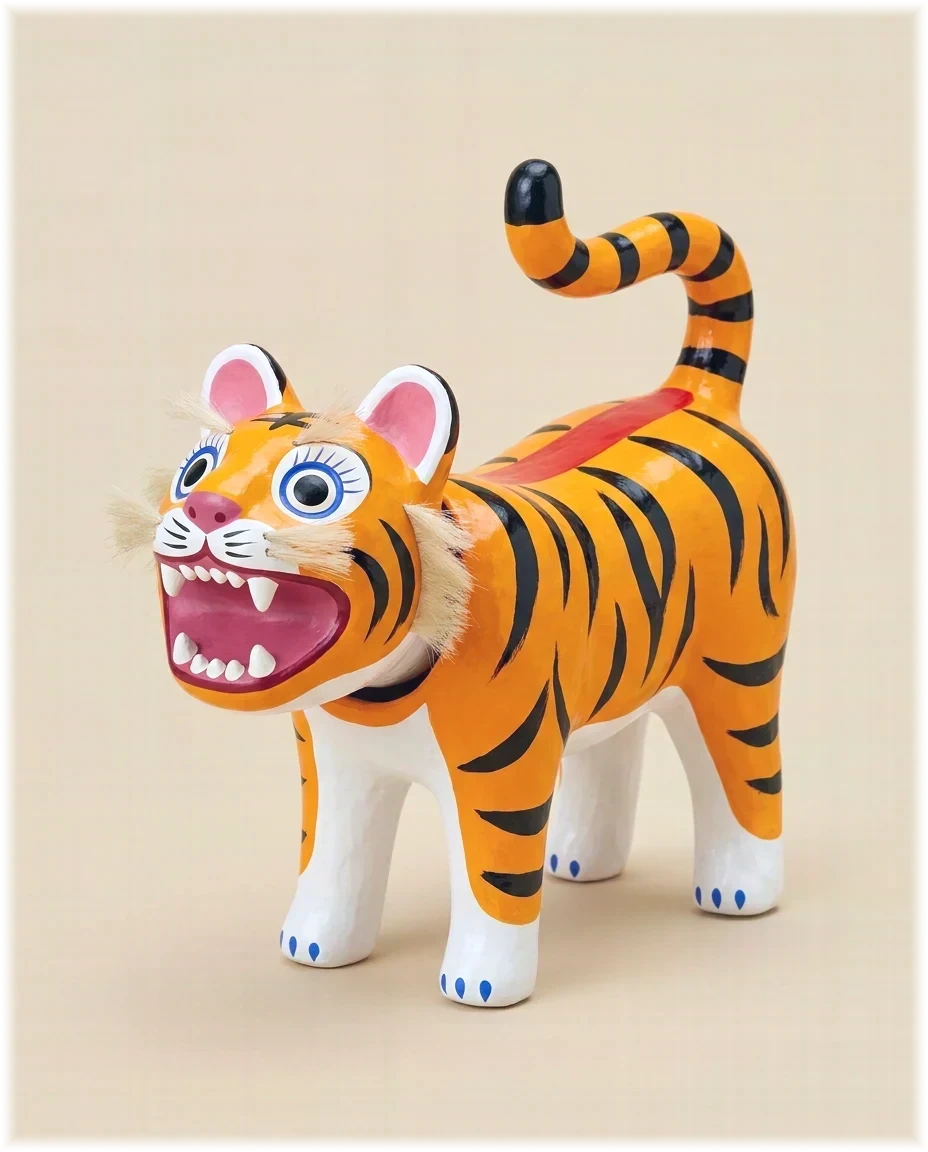
As December closes, homes across Japan also display Eto (干支) figurines, marking the specific zodiac animal of the incoming year. These small figures are often carved from wood using an ittobori (一刀彫) technique, which uses broad, flat chisel strokes to create the animal without sanding the surface smooth. It is a quiet, rhythmic way to mark the passage of time.
| Type of Engimono | Kanji | Primary Material | Traditional Region | Meaning for the New Year |
|---|---|---|---|---|
| Daruma | 達磨 | Papier-mâché (Hariko) | Takasaki, Gunma | Goal-setting, perseverance, and resilience |
| Maneki-neko | 招き猫 | Ceramic or Wood | Seto, Aichi | Inviting prosperity or community into a space |
| Kumade | 熊手 | Bamboo | Nationwide (Shrines) | “Raking in” success and good fortune |
| Eto Figurine | 干支 | Clay or Wood | Nationwide | Honoring the specific zodiac animal of the year |
How should you wrap and present a Japanese gift?
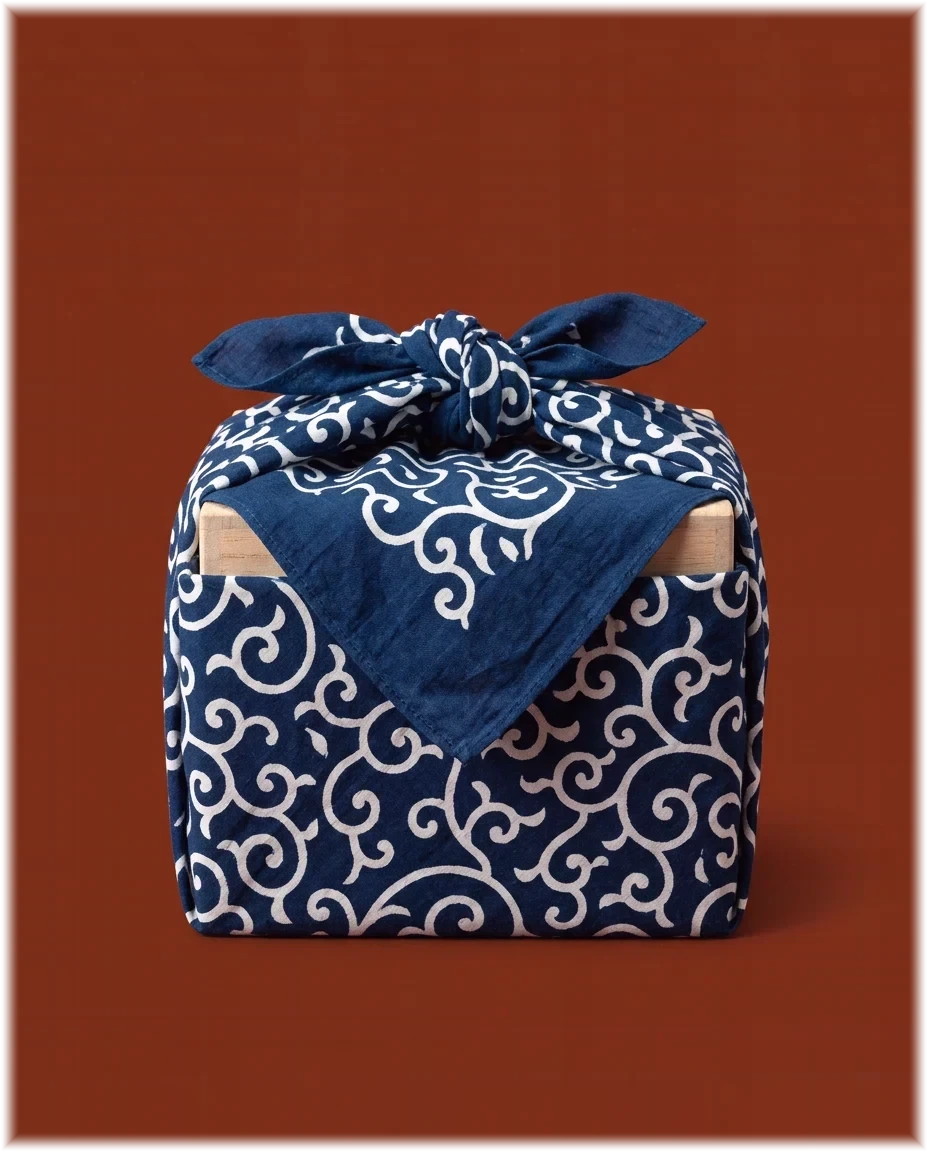
In Japanese culture, wrapping is not an afterthought designed merely to conceal an object until the moment of surprise. The wrapping is the visual language that communicates the gravity of the gift before the box is ever opened. Handing someone a naked, unwrapped object is considered careless, stripping the exchange of its necessary boundary.
The paper used is often washi (和紙), traditional Japanese paper made from the bark of the paper mulberry tree. It is thicker and more fibrous than Western wrapping paper, allowing it to hold a sharp crease without tearing. The paper is folded sharply and secured cleanly. Color plays an immediate role. White paper used alone is strictly associated with mourning and funeral offerings. Red, gold, and green are considered auspicious and are used for celebrations and new beginnings.
The mizuhiki cords bind the paper. These cords are stiff and precise. For a year-end gift, a new home, or a new baby, the cord is tied in a cho-musubi (蝶結び), a butterfly bow. Because a bow can be pulled apart by its loose ends and tied again, it is used exclusively for joyous events that the giver hopes will repeat. Conversely, the musubi-kiri (結び切り) is a hard, tight knot with the ends clipped short. It cannot be undone. It is used only for weddings, funerals, or get-well gifts—events that the giver hopes the recipient will never have to experience again.
The physical presentation follows its own quiet choreography. The giver offers the wrapped box with both hands, accompanied by a slight bow. It is traditional to offer a humble phrase, such as tsumaranai mono desu ga (つまらないものですが), which translates roughly to “this is a trivial thing, but please accept it.” The phrase is not meant to insult the gift, but to elevate the recipient. Upon receiving the box with both hands, the recipient will not tear the paper open immediately. The gift is set aside to be opened in private. This practice preserves the dignity of both parties, removing the pressure of an immediate, performative reaction.
Instead of viewing these rigid rules as a minefield of potential offense, they can be understood as a deeply reassuring framework. The strict boundaries around numbers, colors, and objects remove the modern anxiety of finding a highly personalized, unique item. The structure itself carries the weight of the gesture. By following the physical grammar of a Japanese gift, the giver steps back, allowing the quiet respect embedded in the tradition to speak entirely for itself.
Maison Homura is a small museum of Japanese objects in Fukuoka — folk toys, ceramics, carved wood and Takaoka bronze, each catalogued with where it was made, how, and what it was for.