May we use Meta and Google cookies to learn which films and pieces people like? Details
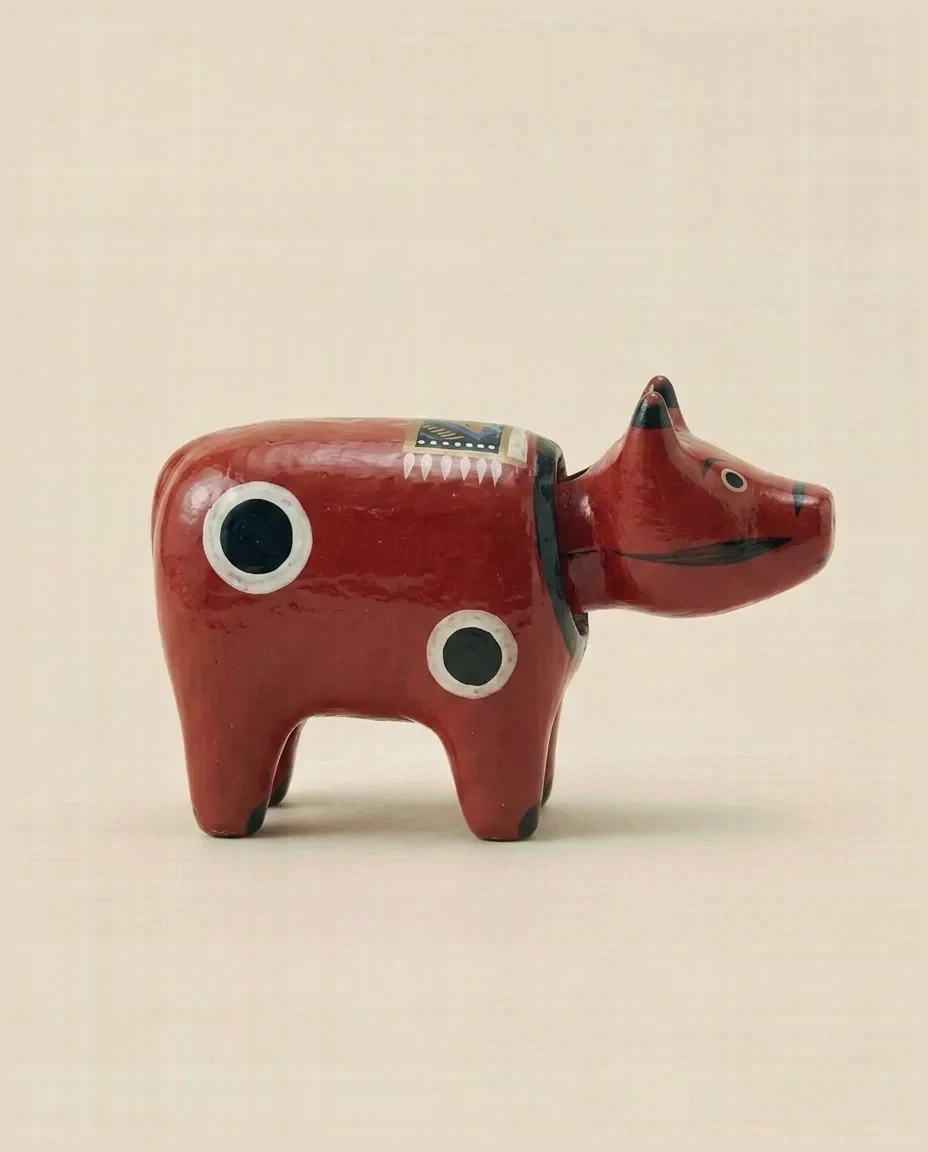
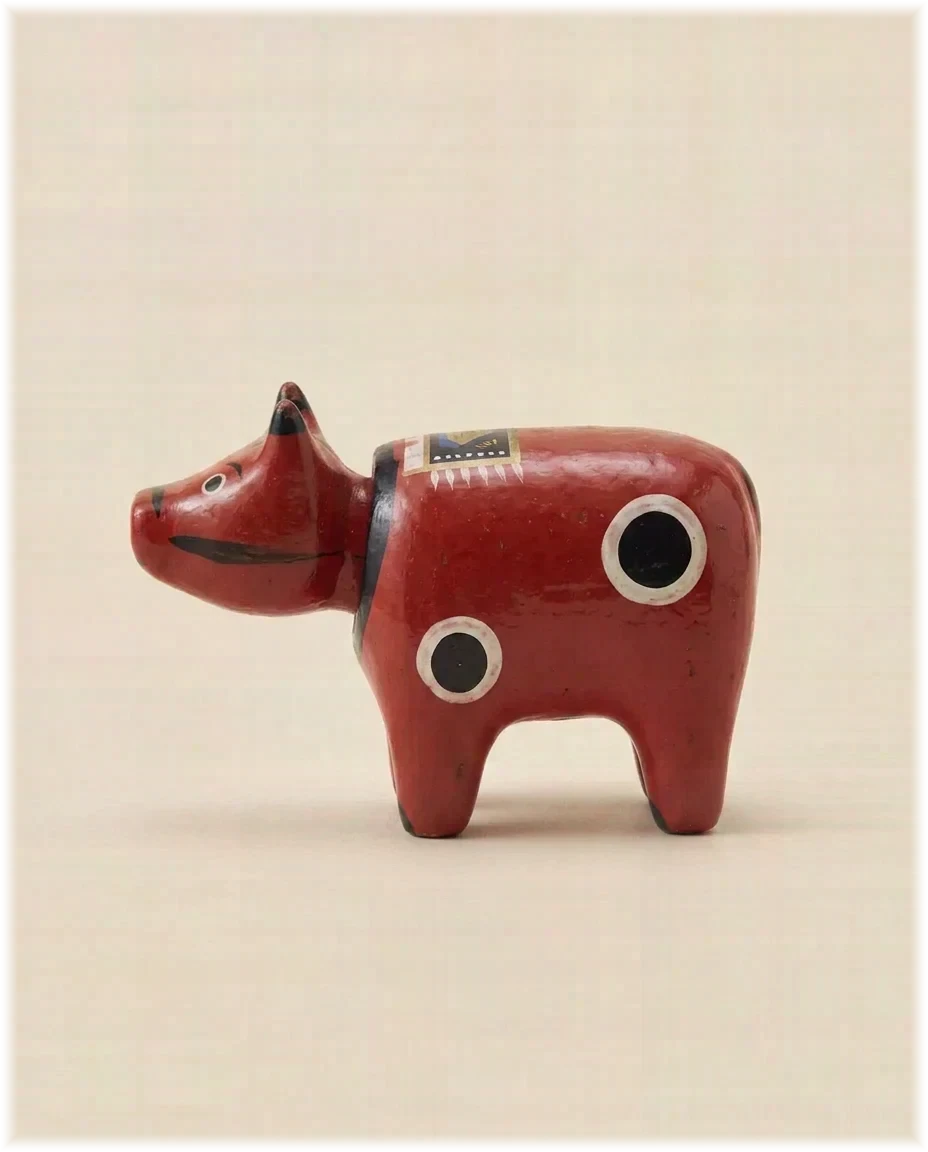
The black spots are smallpox. The toy was meant to take them instead of the child.
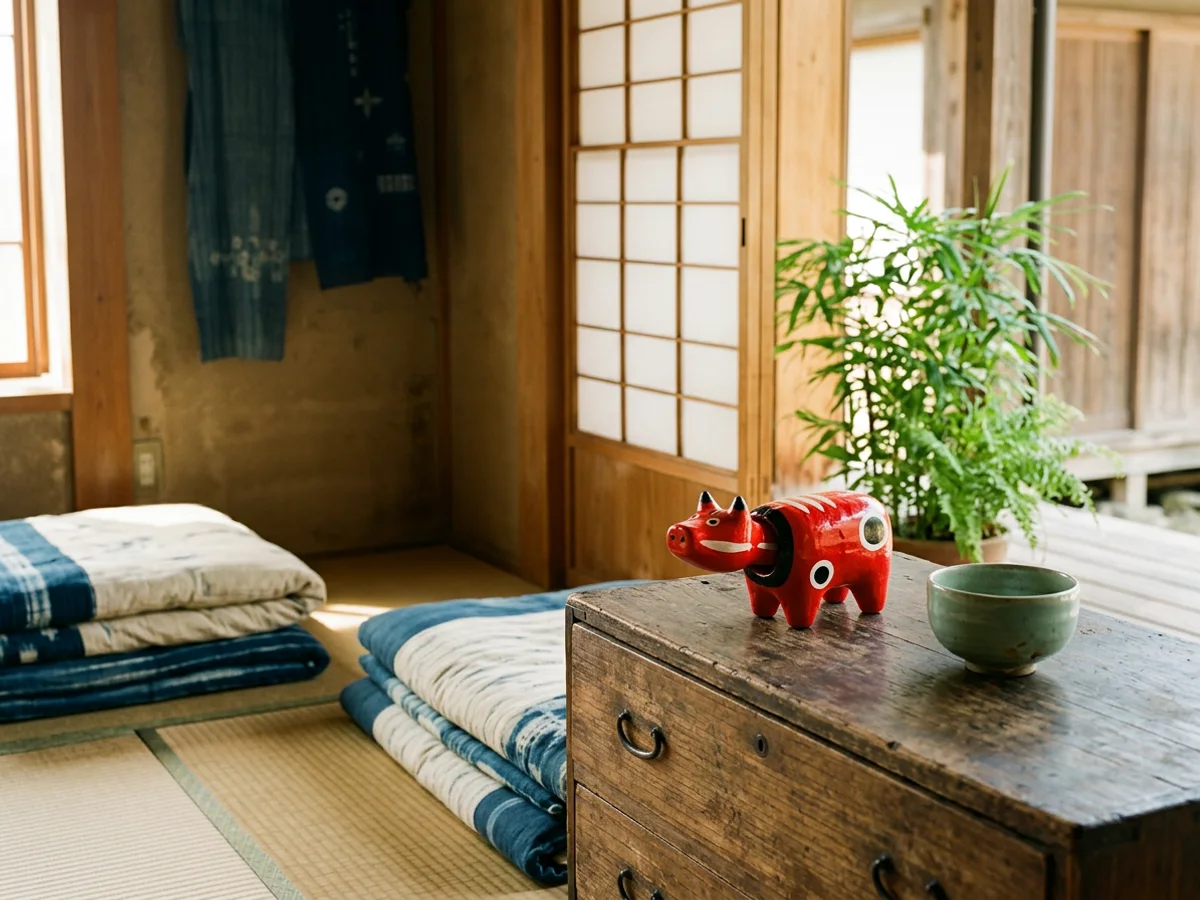
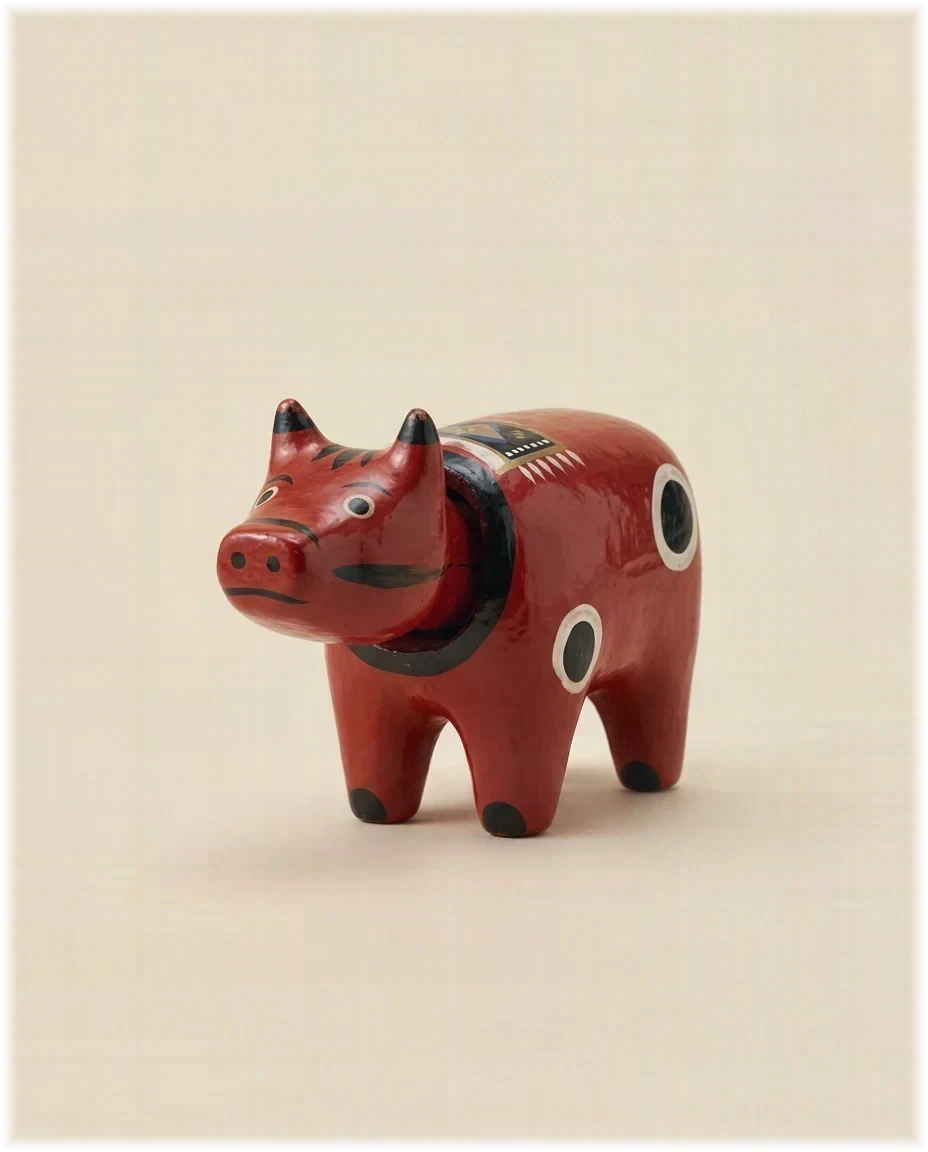
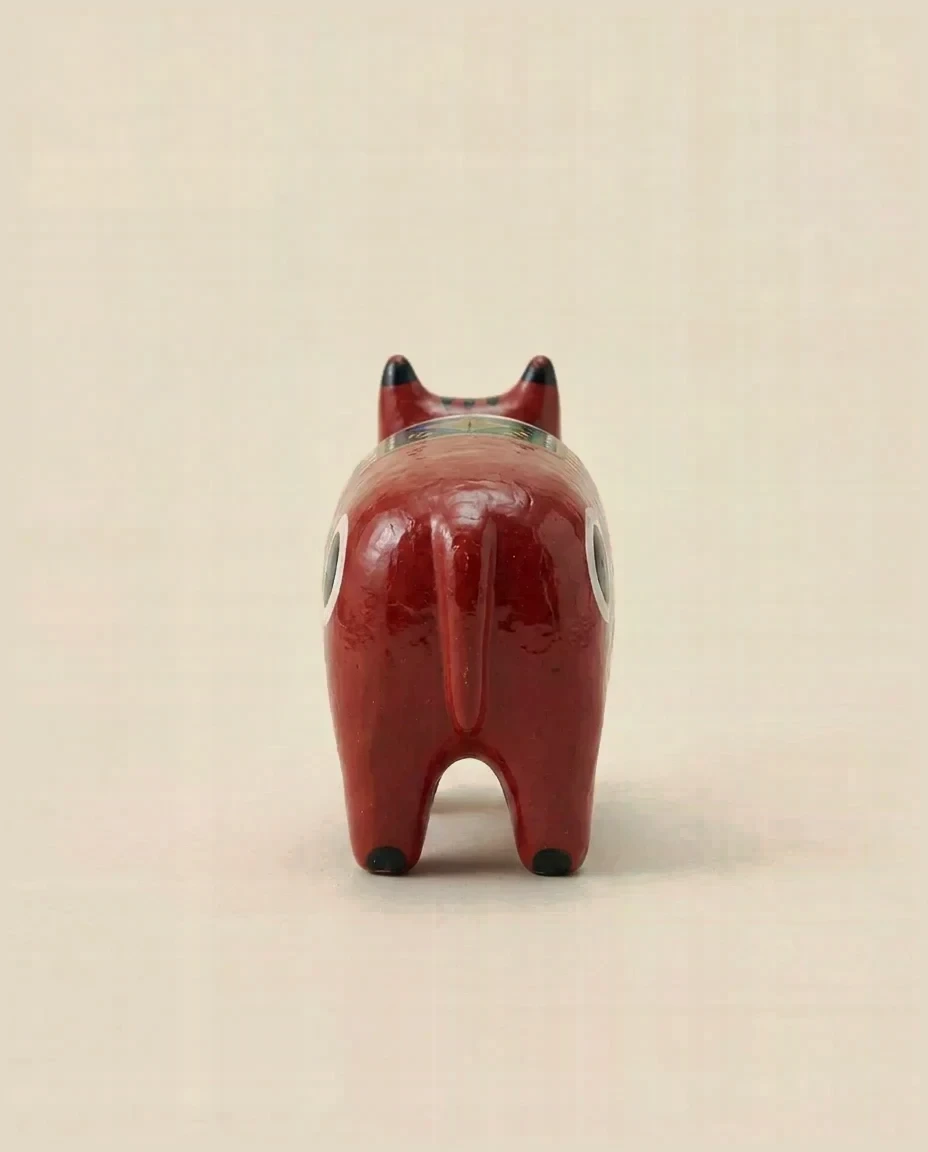
On the shelf · Akabeko Papier-mache Cow · $69 →A red ox of papier-mache, its head hung on a thread so that it nods for a long time after you touch it.
The story attached to it is old. In 1611 an earthquake brought down the main hall of Enzo-ji at Yanaizu. Timber for the rebuilding came down the Tadami River, but no one could haul it up the cliff until a herd of red-haired oxen appeared and carried it. The temple keeps a stone ox to thank them.
Nobody knows where these cows came from. 1611. A massive earthquake hits Aizu, in northern Japan. On a cliff above the Tadami River, the main hall of Enzo-ji, a temple that had stood since the year 807, comes crashing down. Villages upriver send timber, floating it down the river. One problem. The logs are at the bottom of the cliff. The hall goes at the top. And the workers can't get them up. Then, out of nowhere, a herd of red-haired cows walks out of the forest. And they start hauling the timber. Log after log. All the way up the cliff. Until the hall stands again. The town carved a stone cow at the temple, to say thank you. Then they started making little red ones out of paper, with a head on a string that never stops nodding. Families came to believe it kept their children safe from smallpox. They call it akabeko. Four hundred years later, it's still nodding. If you'd like one of your own, Maison Homura will go and look for it. And still, nobody knows where those cows came from.
These are the pieces we have in Fukuoka today. After something else? Tell us here.
5.0 · Star Seller on Etsy ↗Pick a budget and who it is for — that is enough. We write back with photographs, condition and a price.
Sent. We will write back to that address.
That did not go through. Try again in a moment.
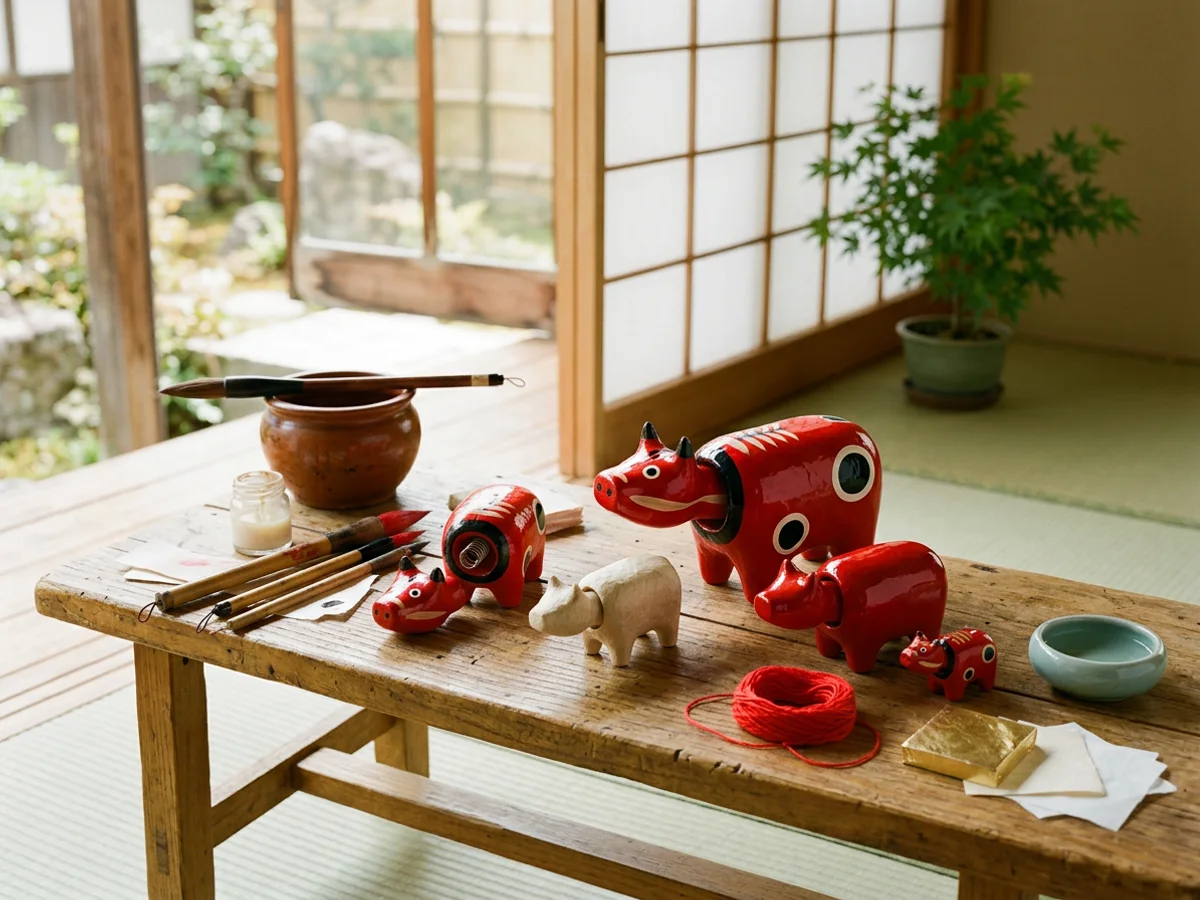
Body and head are formed separately — the head must hang free.
Washi over the form, dried hard.
The head is hung on a thread inside the body, so it nods on its own.
Red ground with black and white spots — the marks are of smallpox, warded off.
The colour is the point. Red was believed to keep smallpox away, and the black roundels painted along the flanks are the pox marks — the toy was given to a child so that it would carry the marks instead of them.
It is a cheerful object with a frightened origin. Most Japanese folk toys are.
Snow country. Aizu is shut in for a third of the year, and the crafts that came out of it are the crafts you can do indoors between November and March — lacquer, painted candles, papier-mâché cattle.
Hello! Ask us anything: a piece, a size, shipping, or something you are looking for. Photos are welcome too.

