May we use Meta and Google cookies to learn which films and pieces people like? Details
Not a demon. A god who comes down the mountain once a year to check on you.
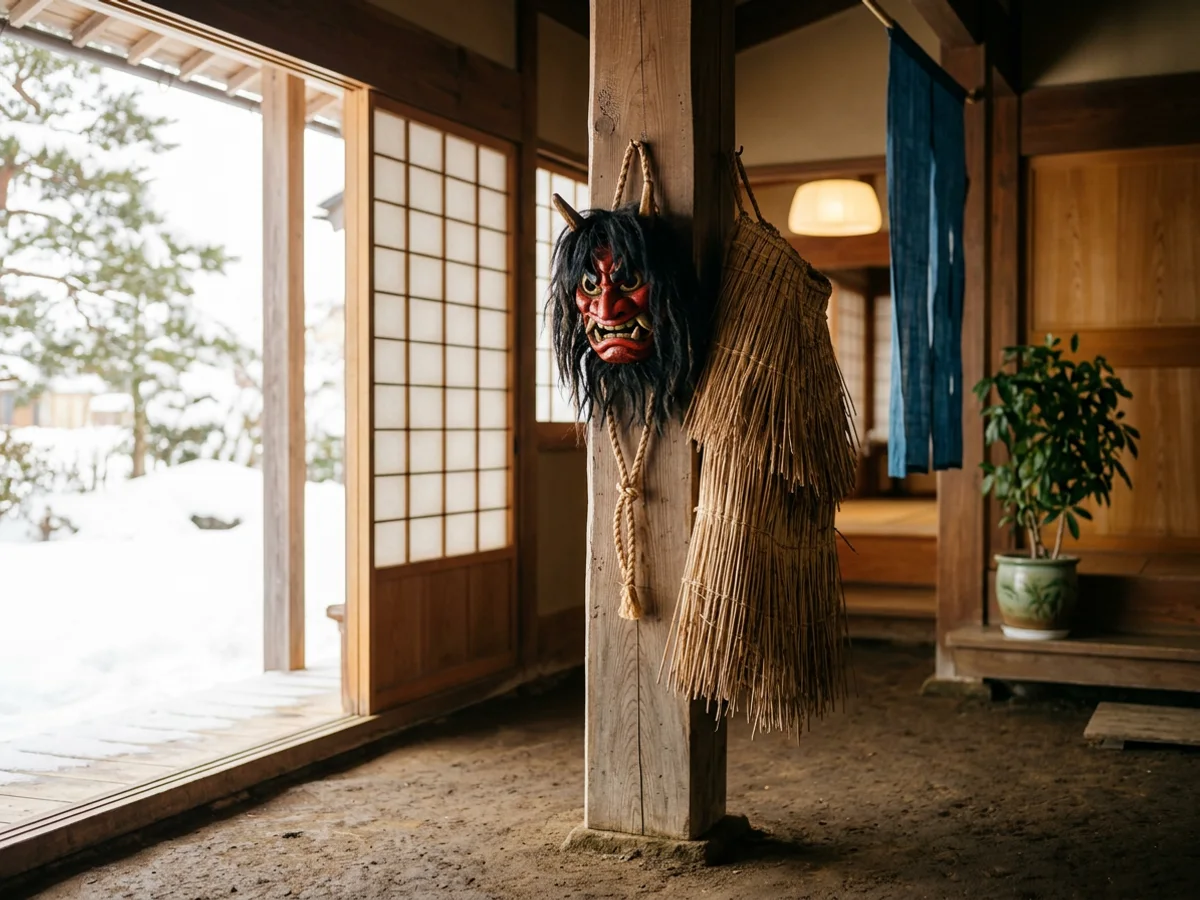
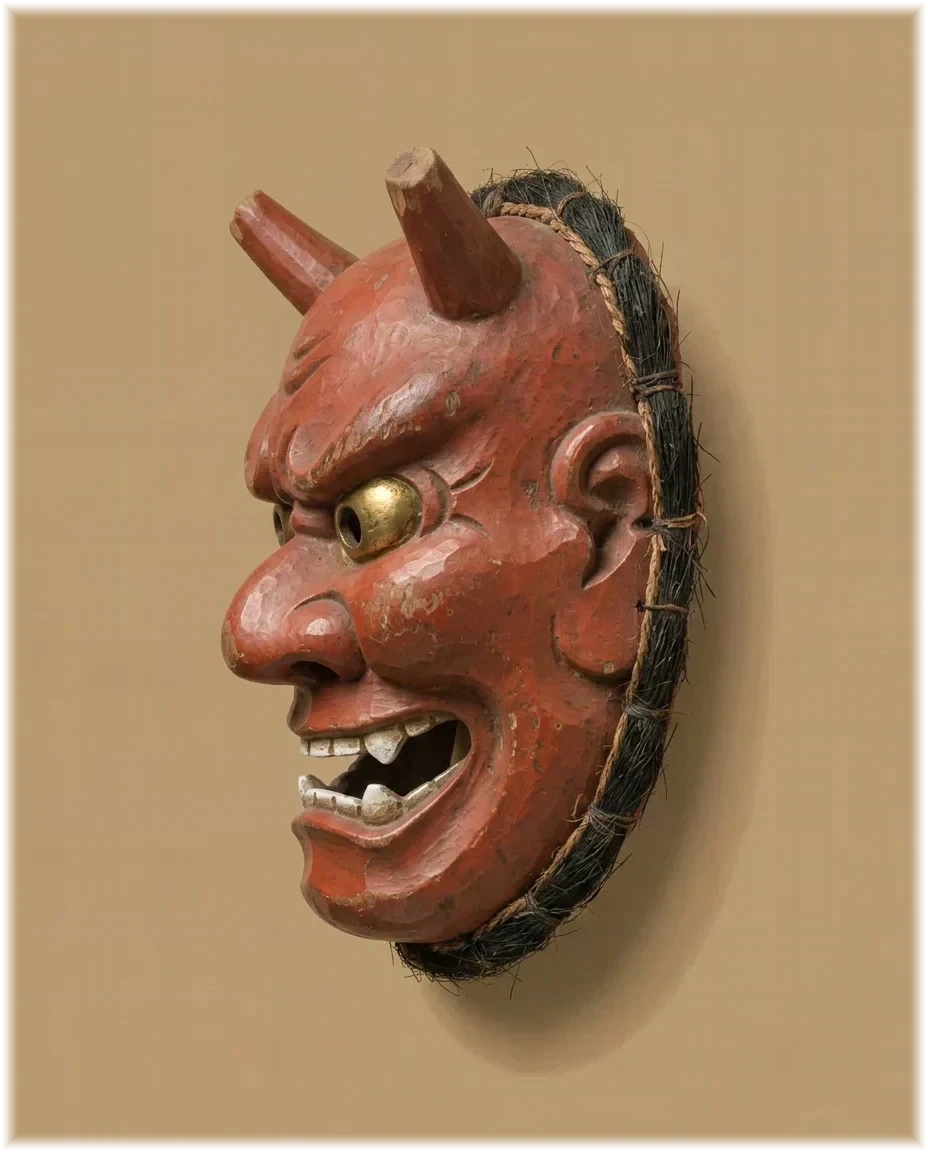
On the shelf · Oga Peninsula Namahage Wall Hanging · $109 →On the last night of the year, on the Oga peninsula in Akita, young men put on these masks and capes of rice straw and go from house to house through the snow. They stamp, they shout — "Are there any crying children? Any idlers?" — and the children of the house are genuinely frightened.
Then the head of the household sits them down, pours them sake, and formally reports on the year: who worked, who did not, who was born. The visitors accept the account, warn the family once more, and leave for the next house. It is a household audit conducted by gods in straw.
Japan has a Krampus. But here, parents open the door for him. Every New Year's Eve in Oga, men in demon masks and straw coats go house to house, roaring: "Any crybabies? Any lazy ones?" Even the name is a threat. Sit by the fire all winter, and your shins break out in red blotches. Namomi. Namahage means "the one who peels them off." The children scream. The father steps in, pours them sake, and swears the kids will be good. But the demons carry a book. And everything in it, the parents told them, before the door ever opened. When they leave, the straw that falls from their coats is kept, for a year of good health. If you'd like one of your own, Maison Homura will go and look for it. Krampus works for Santa. The namahage works for Mom.
These are the pieces we have in Fukuoka today. After something else? Tell us here.
5.0 · Star Seller on Etsy ↗Pick a budget and who it is for — that is enough. We write back with photographs, condition and a price.
Sent. We will write back to that address.
That did not go through. Try again in a moment.
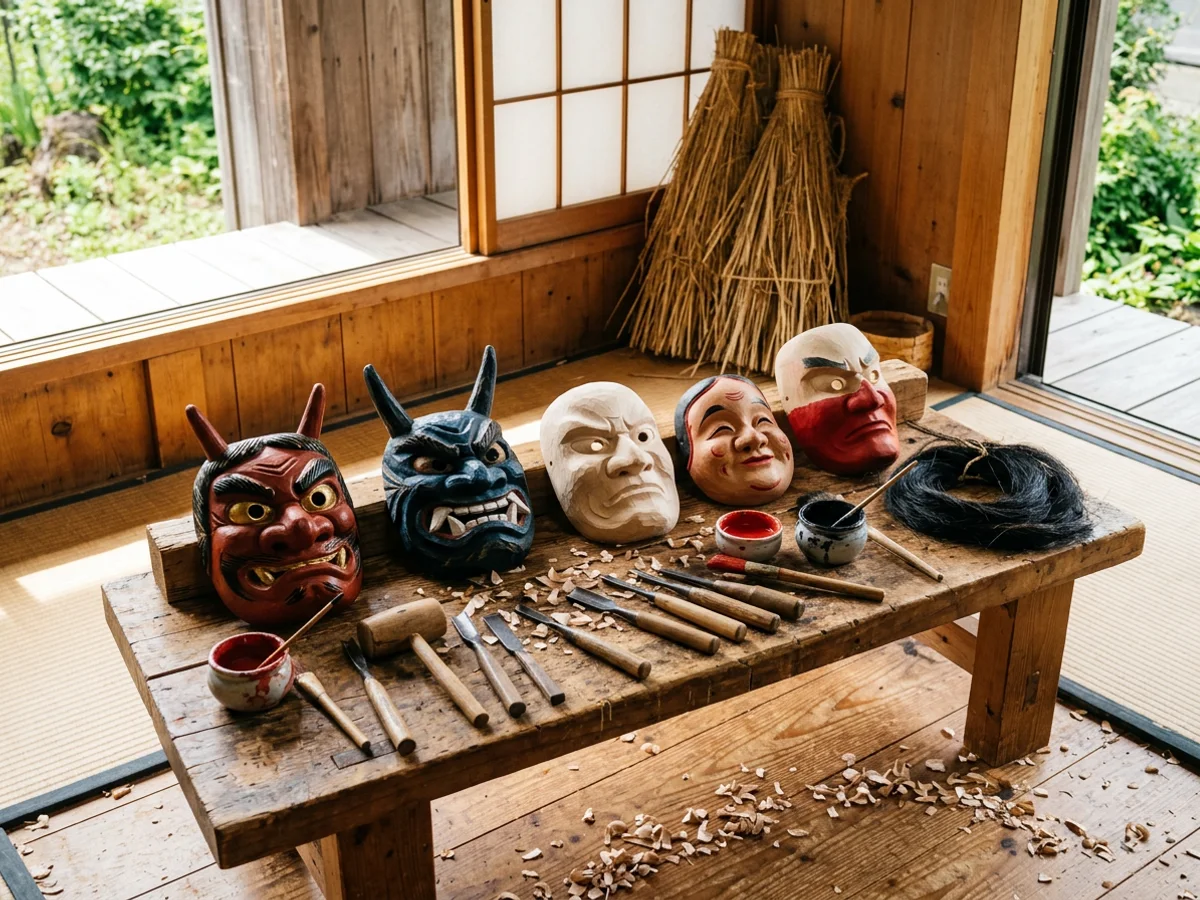
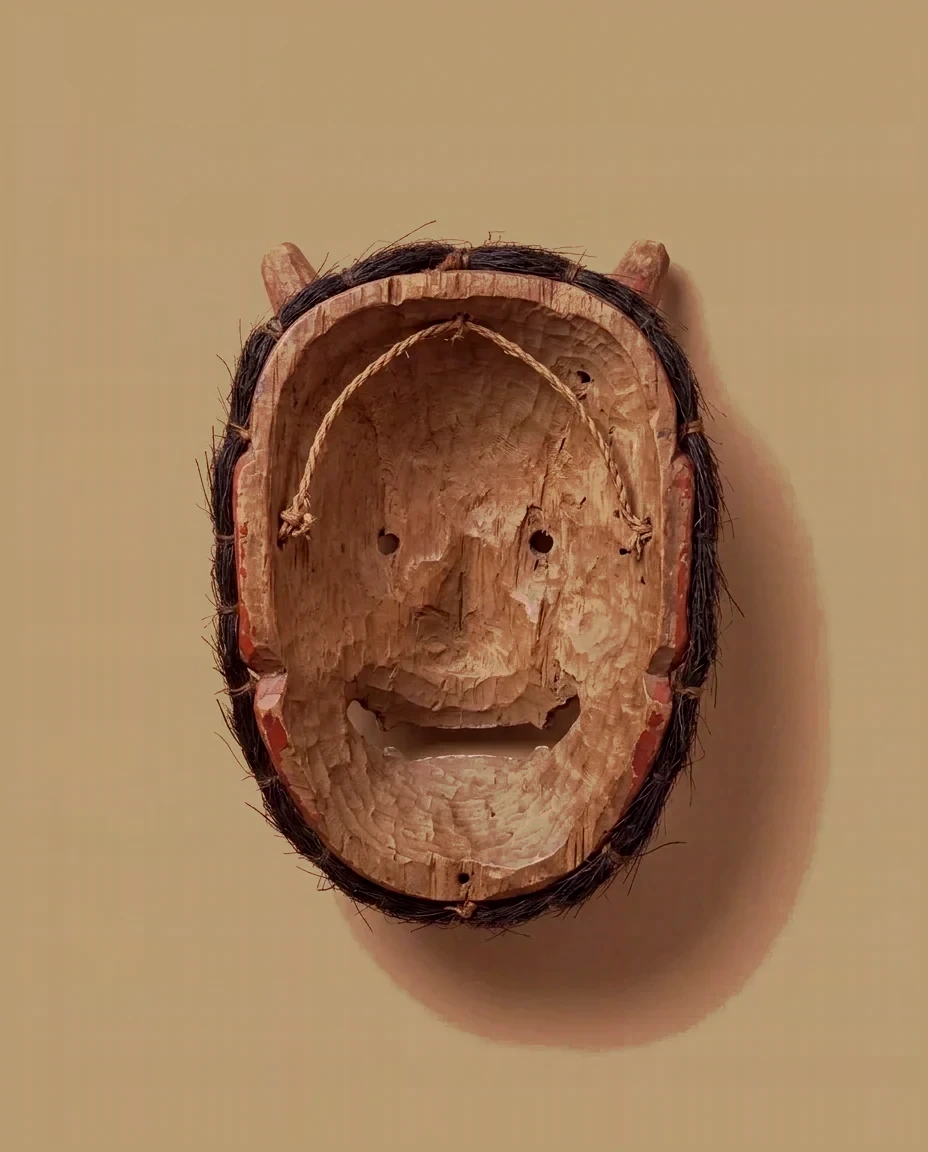
Older masks are carved from a single block; village masks may be papier-mâché or basket.
Red or blue ground, laid on thick — the mask is seen at night, by firelight.
Hair of horsehair or straw is fixed around the whole edge.
Horns and teeth are cut separately and driven in.
They are not demons, and calling them that misses the point. They are raihōshin — visiting deities who come from the mountain at the turn of the year, and the fright is the price of the blessing they leave behind.
The masks are carved village by village and no two villages agree. Some are red, some blue-black, some have horns and some none at all; the older ones were made of colander bases, wood, or paper over a mould, whatever the house had. The straw capes shed as they walk, and a fallen strand picked up off the floor is kept for luck.
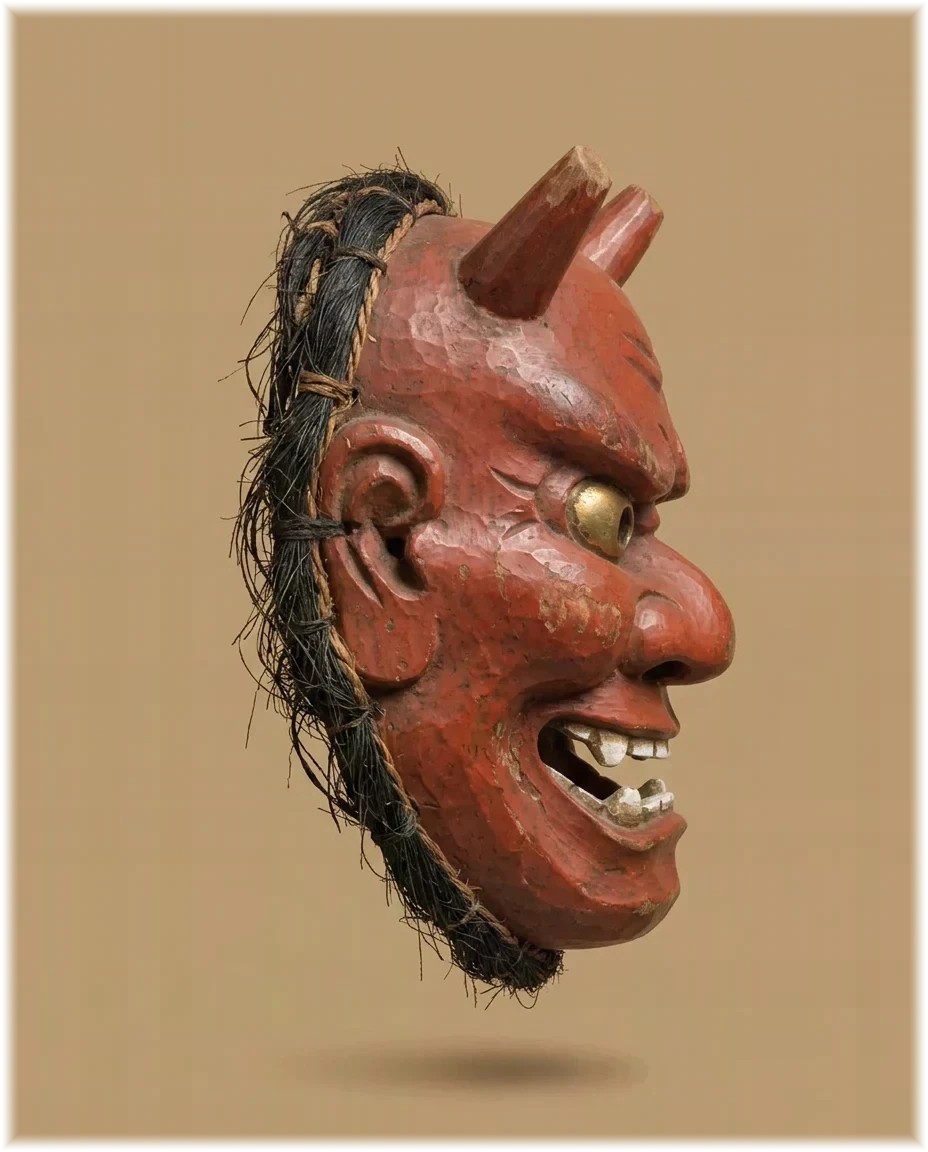
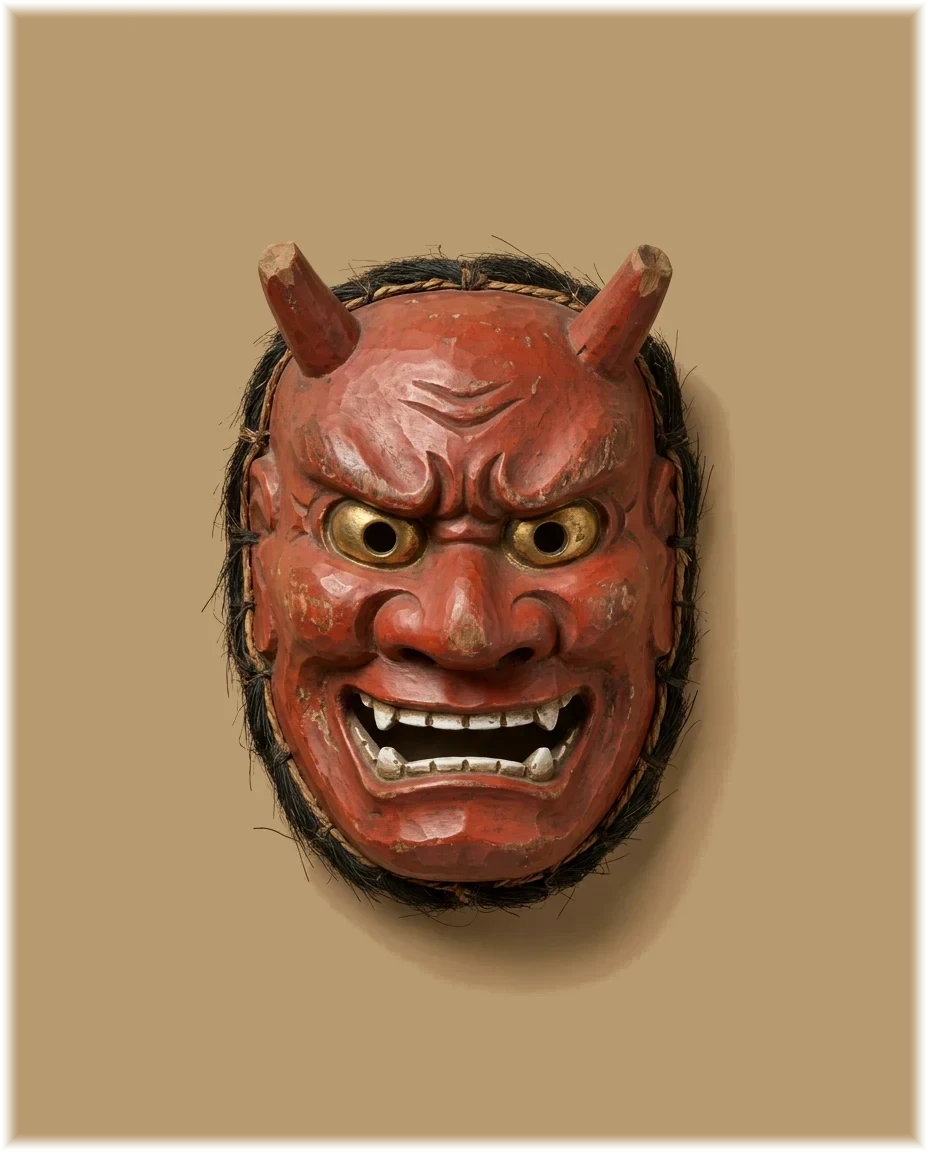
A peninsula that pushes out into the Sea of Japan, with a mountain in the middle and villages around the rim. On the last night of the year the young men of each village climb into straw capes and carved masks and go from door to door through the snow, and the children scream.
Hello! Ask us anything: a piece, a size, shipping, or something you are looking for. Photos are welcome too.

